Paper Skin, SOURCE Photographic Review (Issue 92),
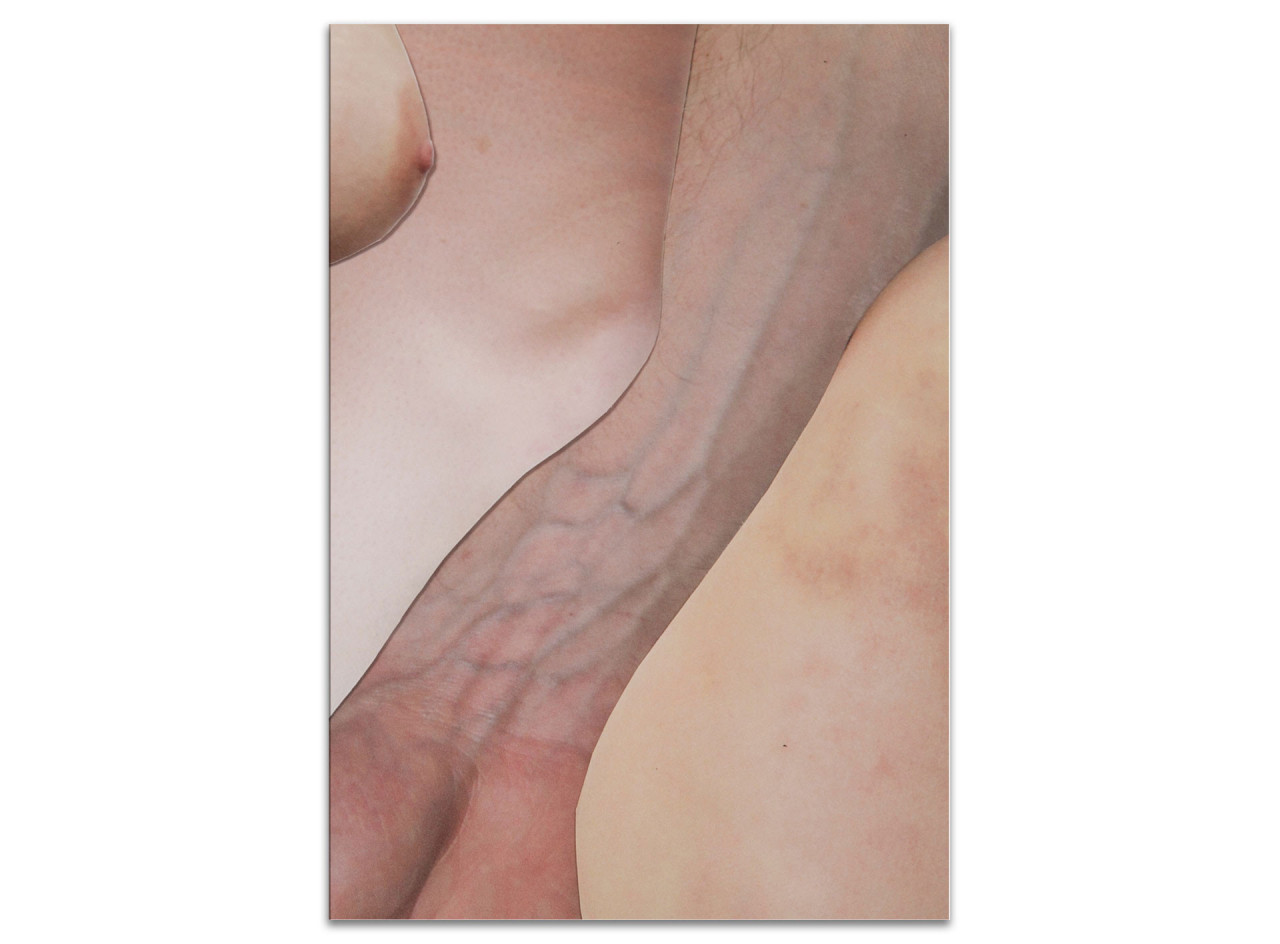
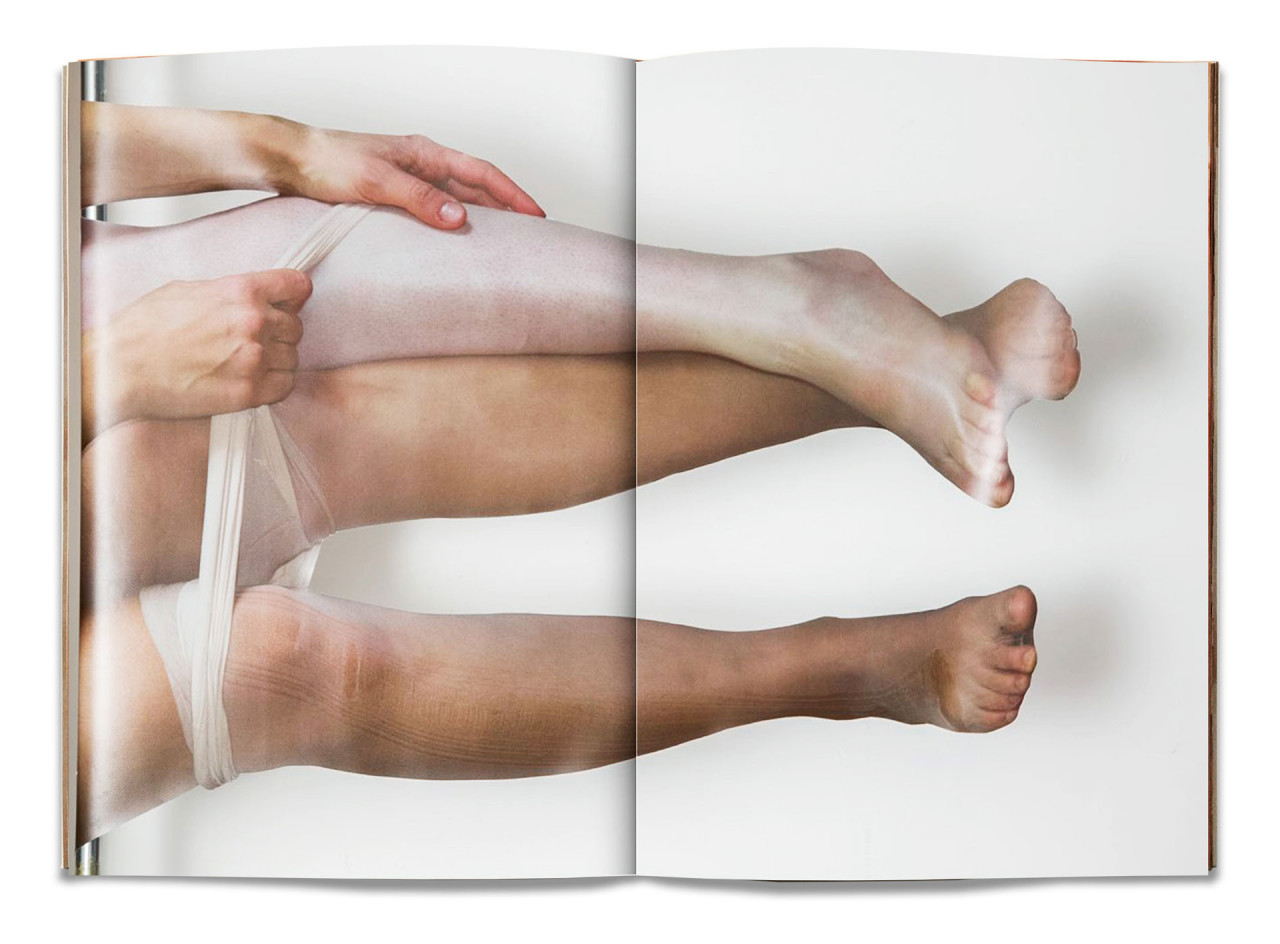
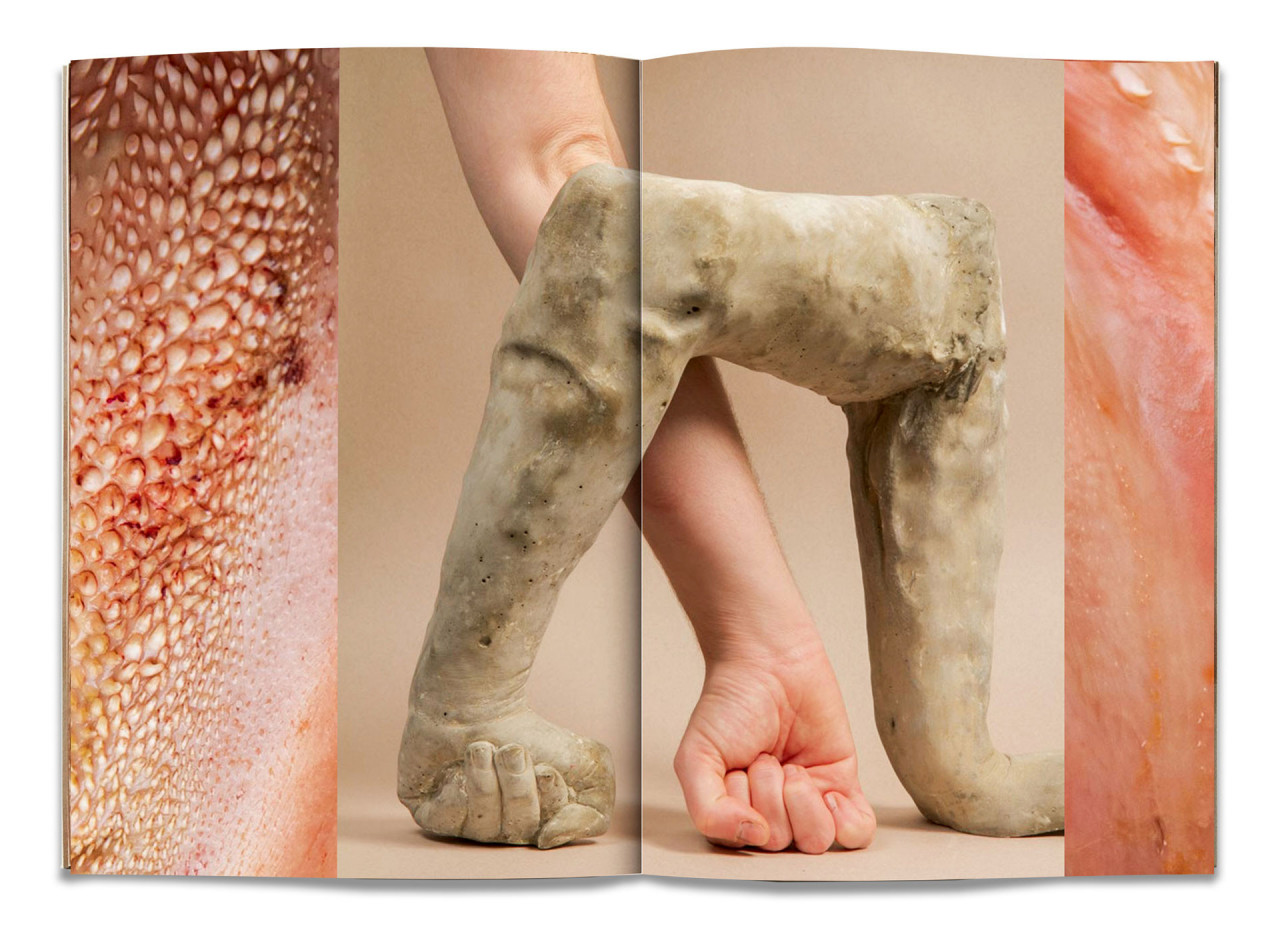
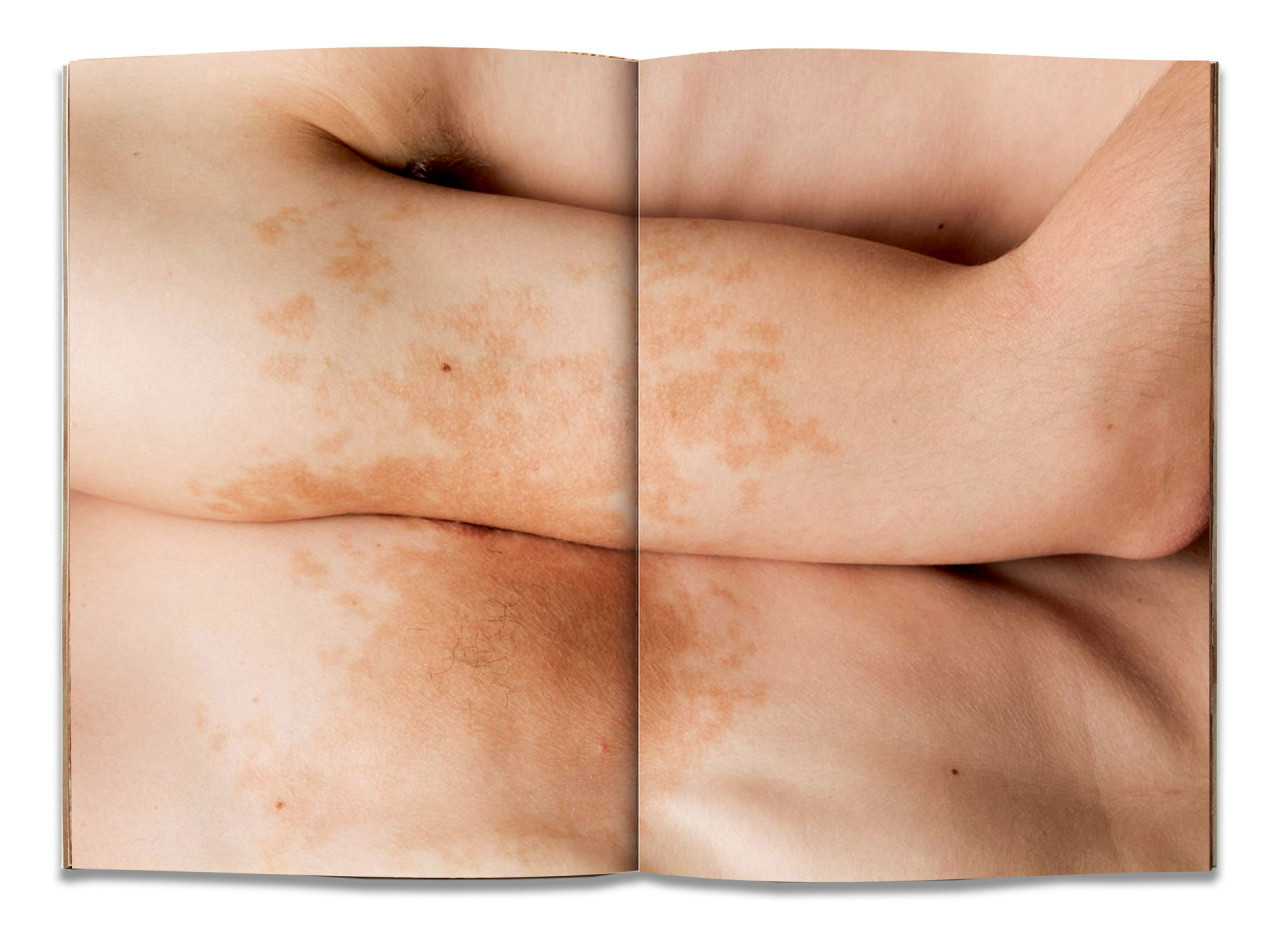
For a photographer used to exploring the point at which photography becomes sculpture, the format of the photo-book presents a challenge. Unlike the immersive installations that break down the boundaries between the two forms, for her first book Alix Marie relegates the materiality of the body to paper. In places highly-glossed and in others matt and vynil-smooth, each skin-like page traces the idiosyncrasies of the body’s own surface: the sunset tones of a bruise, goose-bump flesh and coral-like folds, birthmarks and broken veins. Gauzy fabrics create pixelated screens within the frame, while montage-effects juxtapose flesh and meat to recreate the body as a landscape of undecipherable matter.
Often lingering on the edges of desire, in Marie’s photography the lens probes a scopophilic wound in which our relationship to amorphous lumps of anonymous flesh is always poised on the precipice of disgust. BLEU’s invitation to touch and consume the flesh on offer is no different. At once seductive and repellent, its mirror-shiny pages both attract and deflect our gaze - one that is made material as eyes and mouths, vision and touch, become confused. Scratchy edges cut a peep-hole from which instead a pink nipple protrudes; elsewhere a slick tongue pokes through a statue’s stone flesh, creating rupture in the photographic skin. Excessive to the point of revulsion, flesh is rendered abject: all mucous membrane and ambiguous orifices, any recognisable form starts to break down, subjects and objects merge into one.
Photography has long borrowed from a language of skin and flesh - think of Roland Barthes’ umbilical cord of light that, he fantasised in Camera Lucida, promised to reconnect him to the maternal body lost forever to the photograph’s elegiac light. In Marie’s BLEU, that light-filled connection is made flesh once more. But, constrained by the page, the photograph remains suspended - just - on the border between self and other. Its own flawed but ultimately perfect skin allows it to be contained in the realm of pure image - threatened by the body’s material ‘thingness’ that cannot.
Harriet Riches, 2017