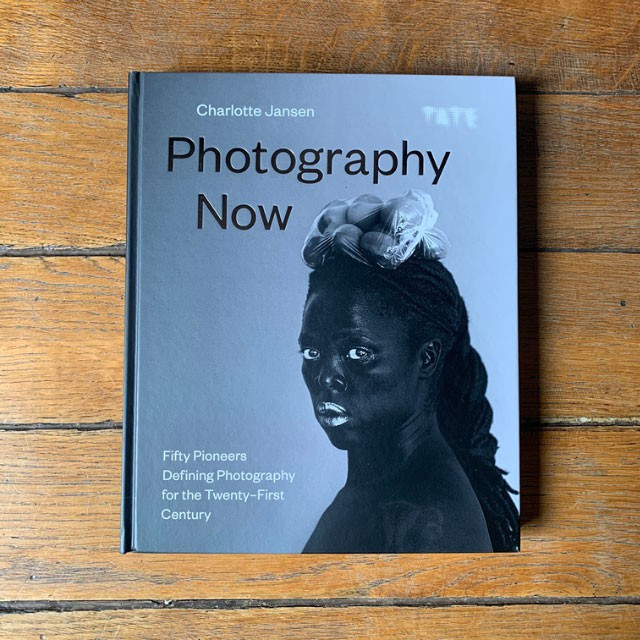
From Photography Now: Fifty Pioneers Defining Photography for the Twenty-First Century, TATE and ILEX Publishing
Born in Paris in 1989, Alix Marie was raised on cinema. The first film she watched, at two years old, wasn’t a Disney classic but F.W. Murnau’s Nosferatu (1922), the classic silent horror film about a vampire interested in buying a new property – and in his estate agent’s beautiful wife. Marie has said in an interview that this early encounter with the grotesque has informed her highly unusual works, in which she sculpts photography into something fleshy, visceral and downright strange.
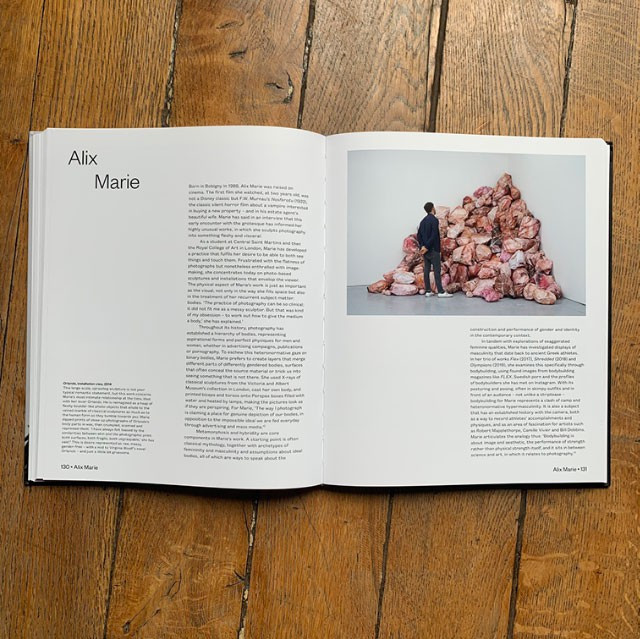
As a student at Central Saint Martins and then the Royal College of Art in London, Marie developed a practice that fulfilled her desire to be able to both see things and touch them. Frustrated with the flatness of photographs but nonetheless enthralled with image making, she concentrates today on photo-based sculptures and installations that envelop the viewer, capturing something of the absorption of the cinema goer sitting in the glow of the silver screen. The physical aspect of Marie’s work is just as important as the visual, not only in the way she fills space but also in the treatment of her recurrent subject matter: bodies. ‘The practice of photography can be so clinical; it did not fit me as a messy sculptor. But that was kind of my obsession – to work out how to give the medium a body,’ she has explained. Marie’s sculpted photographs create an unsettling form that takes you inside the image, making you a little more aware of your own skin.
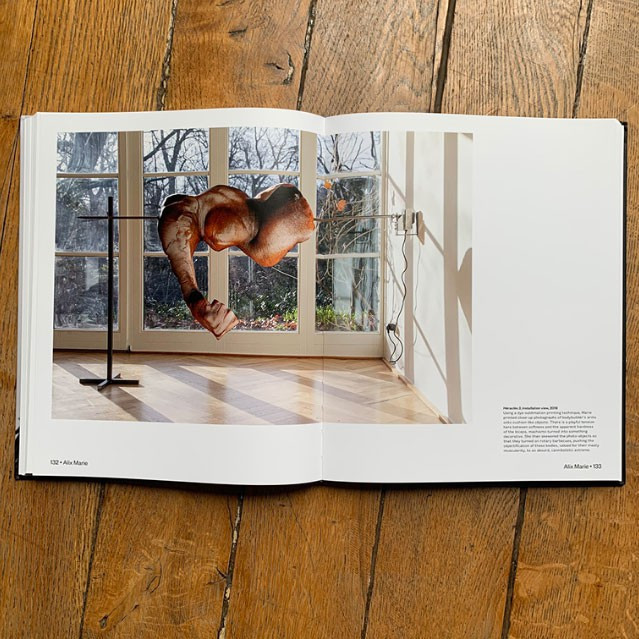
Throughout its history, photography has established a hierarchy of bodies, representing aspirational forms and perfect physiques for men and women, whether in advertising campaigns, publications or pornography. To eschew this heteronormative gaze on binary bodies, Marie prefers to create layers that merge different parts of differently gendered bodies, surfaces that often conceal the source material or trick us into seeing something that isn’t there. She has X-rayed classical sculptures from the Victoria and Albert Museum’s collection, cast her own body, and printed biceps and torsos onto Perspex boxes filled with water and heated by lamps, making the pictures look as if they are perspiring. For Marie, ‘This methodology is to pause and reflect, to dig out other ways of thinking which escape the extremely narrow script we have been given to inhabit our skins. The way I photograph is claiming a place for genuine depiction of our bodies, in opposition to the impossible ideal we are fed everyday through advertising and mass media.’
Metamorphosis and hybridity are core components in Marie’s work. A starting point is often classical mythology, together with archetypes of femininity and masculinity and assumptions about ideal bodies, all of which are ways to speak about the construction and performance of gender and identity in the contemporary context. In her sculptural work La Femme Fontaine (2017), for example, Marie references the Greek mythological figure Niobe, who made the mistake of boasting about how fertile she was; as a consequence, the gods killed her children and the weeping mother was turned to stone. With their hybrid bodies, the Greek sirens, who lured sailors to their death with their song, have also been an inspiration, as has the Pythia, the high priestess at Apollo’s oracle in Delphi, who evoked both fear and wonder because of her deep knowledge. These ancient figures serve as prototypes for continuing stereotypes of femininity as hysterical, seductive and dangerous.
In tandem with these explorations of exaggerated feminine qualities, Marie has investigated displays of masculinity that date back to ancient Greek athletes. In her trio of works Flex (2017), Shredded (2018) and Olympians (2019), she examines this specifically through bodybuilding, using found images from bodybuilding magazines like FLEX, Swedish porn and the profiles of bodybuilders she has met on Instagram. With its posturing and posing, often in skimpy outfits and in front of an audience – not unlike a striptease – bodybuilding for Marie represents a clash of camp and heteronormative hyper-masculinity. It is also a subject that has an established history with the camera, both as a way to record athletes’ accomplishments and physiques, and as an area of fascination for artists such as Robert Mapplethorpe, Camille Vivier and Bill Dobbins. Marie articulates the analogy thus: ‘Bodybuilding is about image and aesthetic, the performance of strength rather than physical strength itself, and it sits in between science and art, in which it relates to photography.’
Charlotte Jansen, 2021